Adhesives & Basecoats
Browse the Licata adhesives & basecoats range, manufactured to the highest standards and available from our six branches across the UK.
Adhesives, basecoats and reinforcing products form the structural heart of every render and external wall insulation system. The reinforced basecoat, with mesh fully embedded, provides impact resistance and controls cracking by spreading stress across the elevation rather than letting it concentrate at openings and junctions. Licata adhesives bond insulation boards to a wide range of substrates, from masonry and concrete to render carrier boards on timber and steel frame construction, and are matched to the finish specified above them.
Adhesives & Basecoats
EWI adhesives and reinforced basecoats for bonding insulation and preparing surfaces for render finishes.


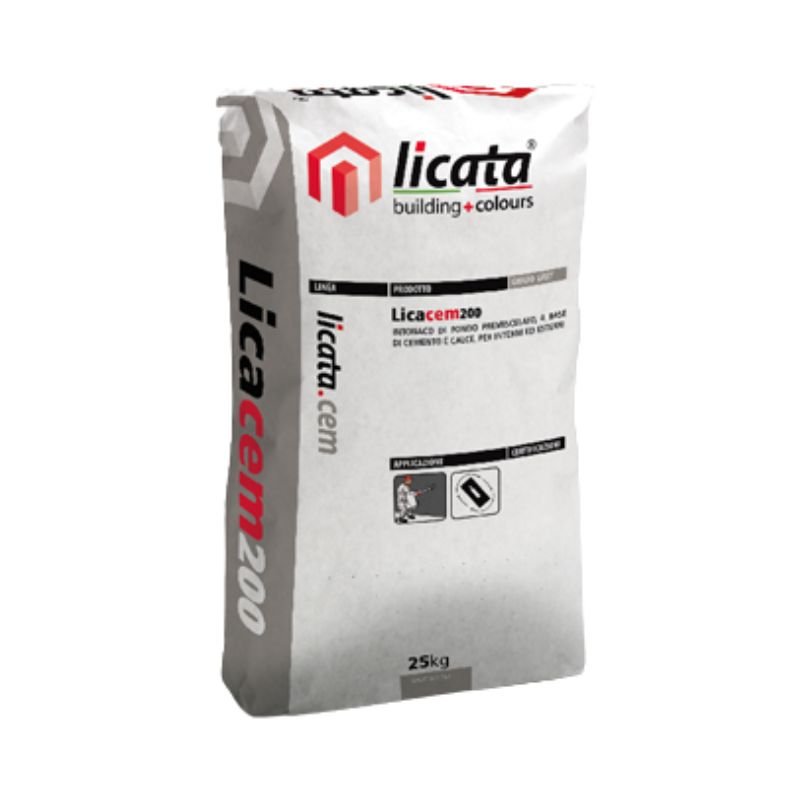
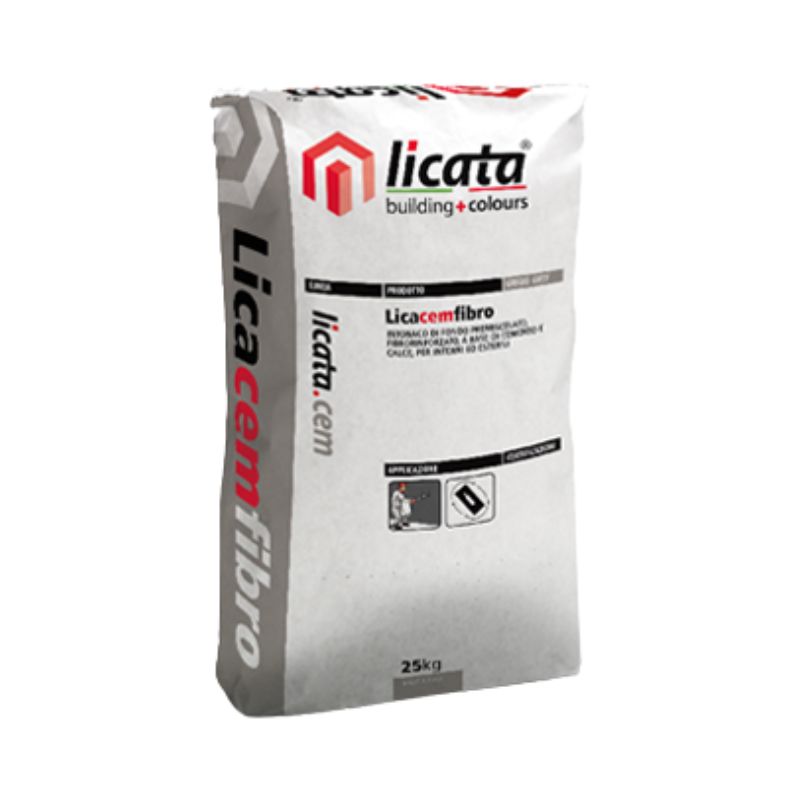
Adhesives and basecoats for render and EWI systems
Adhesives and basecoats are the structural layer of any render or external wall insulation build-up. They rarely get the attention the finish coat receives, yet almost every render failure investigated on site traces back to what sits beneath the surface rather than the surface itself.
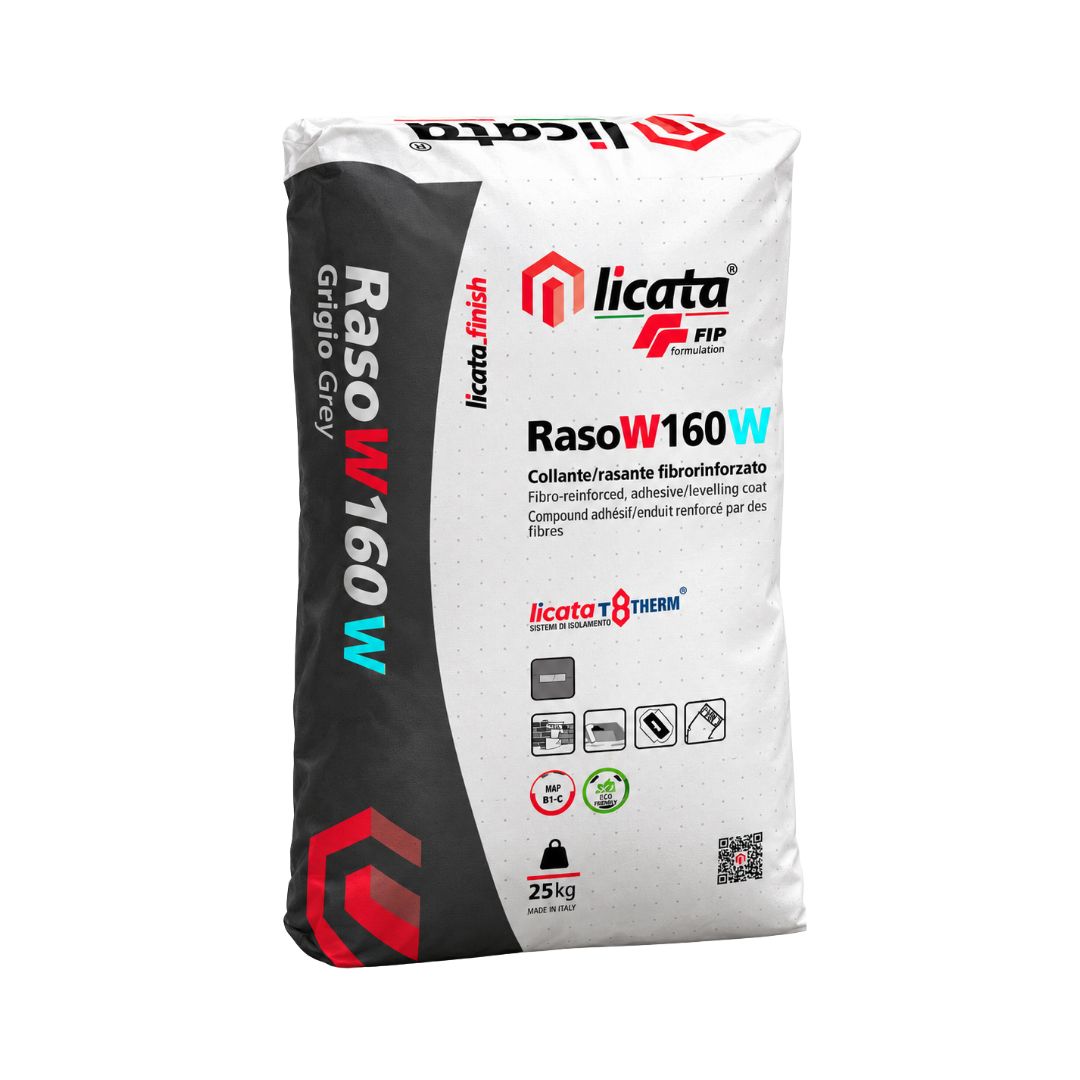
Licata manufactures insulation adhesives, reinforced basecoats and combined adhesive and basecoat products formulated to bond to the full range of substrates found on UK projects, from masonry and concrete through to render carrier boards on timber and steel frame construction. Polymer-modified formulations improve adhesion and water resistance, and each product is matched to the substrate, exposure and finish it will carry.
What a reinforced basecoat does
The basecoat, with alkali-resistant reinforcing mesh fully embedded within it, does two jobs at once:
- Impact resistance: it protects the face of the building from the knocks and abrasion an elevation takes at ground level.
- Crack control: more importantly, it spreads stress across the whole elevation rather than letting it concentrate at weak points, creating a sound base for the finish coat.
Every substrate moves. Thermal cycling, drying shrinkage in new blockwork, and differential movement where materials meet all generate stress in the render. Without reinforcement, that stress finds the nearest weak point, almost always a window corner, a junction between materials or a change of plane. With mesh correctly embedded in the centre of the basecoat, the stress spreads and the elevation stays intact.
Mesh position matters as much as its presence. Mesh laid onto the substrate and then covered, rather than embedded in the wet basecoat, does very little. Correct application places it in the body of the coat, with adequate cover on both sides and generous overlaps at every joint. Depending on the product, basecoats can be applied by hand or by spray. Reinforcing mesh, fixings and beads are available in our insulation and accessories range.
Bonding insulation to the substrate
On an external wall insulation system, boards are both adhesive-bonded and mechanically fixed. The adhesive provides the initial bond and spreads the load, while mechanical fixings give long-term security and resistance to wind uplift. Both are required, and the fixing pattern depends on building height, exposure zone and the weight of the finish above.
A clay brick slip finish weighs considerably more than a render or mineral finish, which is why the finish should be chosen alongside the system rather than after it. Changing the finish late in a project usually means revisiting the fixing schedule. See our brick slip systems and render systems to compare options early.
Substrate preparation
No adhesive performs on a substrate that isn't ready for it. Surfaces must be sound, clean and free of grease, contaminants, organic growth, salts and loose material before adhesive is applied.
On refurbishment and retrofit work, we strongly recommend adhesion testing on a representative sample of each property type before works begin, particularly where the system is going over existing render, pebbledash or paint. Damaged concrete substrates may need concrete repair first.
Application checklist:
- Sound, clean substrate, free of contamination and loose material
- The correct primer applied where suction needs regulating or porous surfaces need sealing
- Adhesive applied at the specified coverage rate and pattern
- Mechanical fixings installed to the project fixing schedule
- Basecoat applied at the specified thickness with mesh fully embedded
Always follow the product's technical data sheet for application conditions and curing times.
Frequently asked questions
What is the difference between an adhesive and a basecoat?
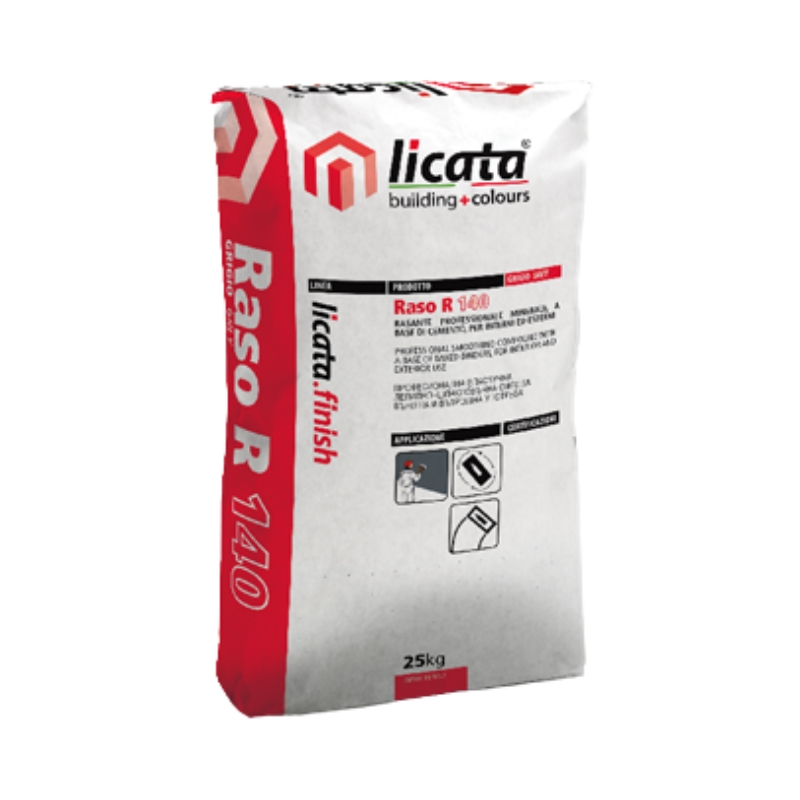
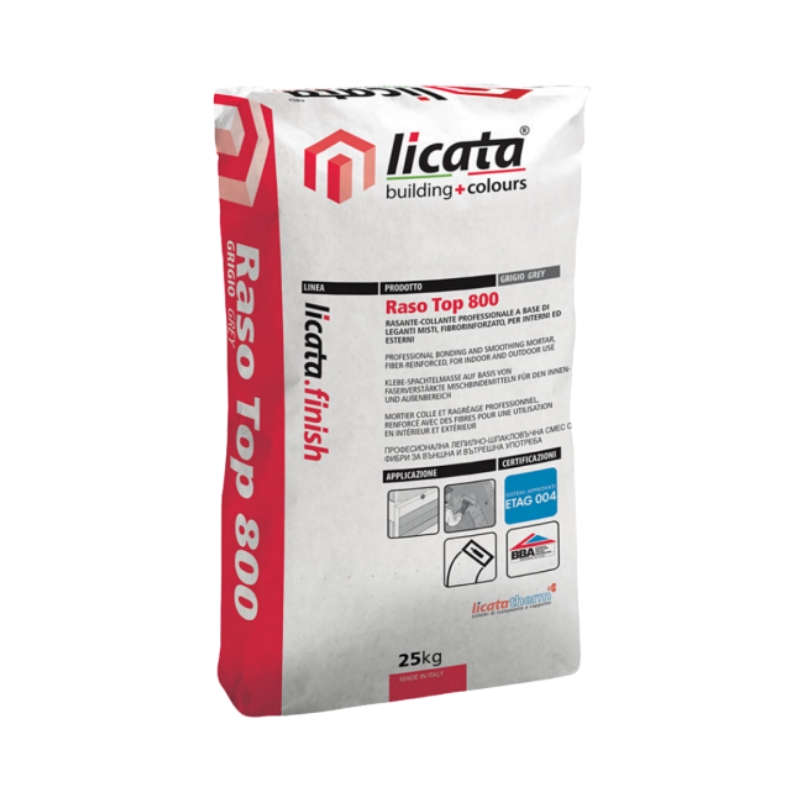
An adhesive bonds insulation boards to the substrate. A basecoat is applied over the insulation (or directly onto the substrate in render-only systems), with reinforcing mesh embedded in it, to create a strong, crack-resistant base for the finish. Several Licata products, such as Raso R140 and Raso Top 800, are formulated to do both jobs.
Do I need mechanical fixings as well as adhesive?
Yes, on external wall insulation systems. The adhesive provides the initial bond, while mechanical fixings provide long-term security and wind uplift resistance. The fixing schedule depends on building height, exposure and the weight of the finish.
Which adhesive or basecoat should I use?
It depends on the substrate, the insulation type and the finish. Specify it as part of a complete system so every layer is compatible and covered by the same certification. Our technical team can confirm the right product for your project.
Supply and technical support
Licata adhesives and basecoats are stocked across six branches in Twickenham, Southgate, Dartford, Wickford, Birmingham and Manchester. Our technical team can confirm the correct adhesive and basecoat for your substrate, calculate quantities, advise on application conditions and help you find a qualified installer.
Specifying a system? Our technical team will confirm the adhesive, basecoat and mesh for your substrate and finish. Get in touch or explore our external wall insulation systems and render systems.