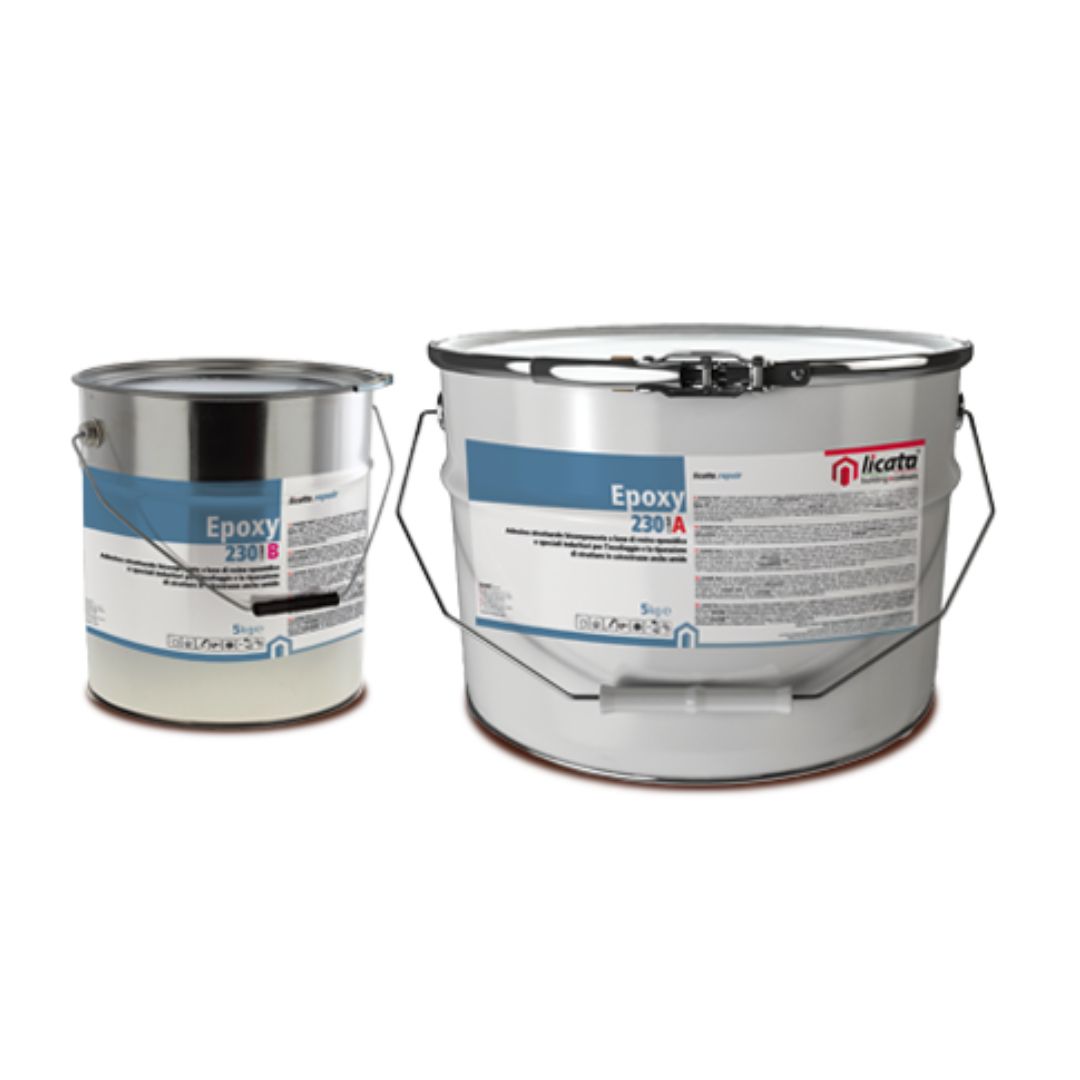
Epoxy 230 A+B

Structural adhesive-based two-component epoxy resin and special hardeners for bonding and repair of concrete structure also when wet.

Characteristics
Excellent mechanical performance
Adheres to wet substrates
Good operating temperature: the operating temperatures of the product are comprised between -30°C and 85°C.
Soft consistency even with excellent thixotropy
Minimum temperature of application 0°C
Ease of preparation: mixing ratio 1:1 by weight

Description

Licata Epoxy 230 A+B

Epoxy 230 A B is a versatile product used for: repairs, reconstruction and grouting work on concrete, for gluing in a structural way diverse construction materials | covering and protecting the reinforcing irons | for the embedment anchors | anchoring bolts, etc. | It has excellent thixotropy but with a soft consistency | It finds its main fields of use for: skimming for cycles of concrete restoration | structural bonding of marble, granite, steel, wood, stone | structural embedment of reinforcing rods | embedment of anchoring bolts, anchors, etc. | interventions on cementitious infrastructure in general.

Applications of Structural Epoxy Adhesive Concrete

Licata Epoxy 230 A+B is a high-strength structural epoxy adhesive designed for a wide range of concrete repair and bonding applications. Whether you are working on beams, columns, slabs or other concrete elements, this two part epoxy adhesive provides strong, permanent adhesion to various substrates including steel, masonry, brick, brickwork, wood, ceramics, aluminium and composites.

Below are some of the most common application examples:

  • Structural reinforcement of concrete elements using carbon fiber plates and steel plates
  • Bonding concrete to dissimilar materials such as metals, composites and stone
  • Injection and filling of cracks in concrete and masonry structures
  • Anchoring bolts and reinforcing rods into hard substrates on site
  • Vertical and overhead applications where a non sag, thixotropic consistency is required
  • Repair of load-bearing components including beams, columns and brick or masonry walls

Because the adhesive hardens without shrinkage, it is recommended for stress-critical areas where dimensional stability and durability are essential. It can be applied to both dry and wet surfaces, making it suitable for a flexible range of site conditions.

Benefits of Structural Adhesive for Concrete Infrastructure

Epoxy 230 A+B delivers very good adhesion across a broad range of construction materials and substrates. The product provides good adhesion even when bonding concrete to metals like steel and aluminium, ensuring strong, permanent contact between components. This makes it one of the most reliable structural adhesives for concrete infrastructure projects.

The adhesive is designed to resist liquids, dust, chemical exposure and temperature extremes, performing within an operating temperature range of -30°C to 85°C. These advantages contribute to long-term durability, reducing the need for repeat intervention on repaired concrete structures.

With minimum shrinkage during curing, the product maintains its strength and dimensional accuracy over time. This is especially important in overhead applications and vertical surfaces where movement or sagging could compromise the bond.

Technical Properties and Specifications

Licata Epoxy 230 A+B is a two part epoxy based system with a simple 1:1 mixing ratio by weight, allowing for ease of preparation on site. The product is thixotropic with a soft consistency, so it can be applied in layers up to several mm thick on vertical and overhead surfaces without slipping.

Consumption will vary depending on the substrate condition and application method. The recommended size of each mix should be based on the working time available. For shelf life and storage guidance, please refer to the product data sheet or contact our technical team.

Installation Guidelines for Optimal Bonding

Before the adhesive is applied, all surfaces must be clean and free from loose dust, grease and any materials that could reduce contact quality. Concrete substrates should be sound and prepared to a minimum standard that allows strong mechanical bonding. Add the two components together and mix thoroughly until a uniform colour is achieved.

For bonding concrete to steel plates, carbon fiber sheets or other composites, ensure both surfaces are prepared and free from contamination. The mixed adhesive hardens progressively, so all components should be positioned and secured within the stated open time.

We always recommend that structural bonding and repair work is carried out by trained professionals. For reviews of completed projects, technical support or product recommendations, contact our sales and technical team or visit your nearest Licata depot.

Additional Info

ColourGrey
WeightTin A 1KG + Tin B 1KG, Tin A 5KG – Tin B 5KG
PreparationAdd the entire component B in the container of component A
Yield ConsumptionConsult the technical data sheet


Data Sheet

Technical Data Sheet