

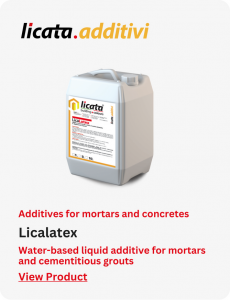
The licata.additives line for mortars and concrete is characterized by a series of high-performance liquid products used in the mix to optimize its characteristics, such as fluidity, setting times and resistance.
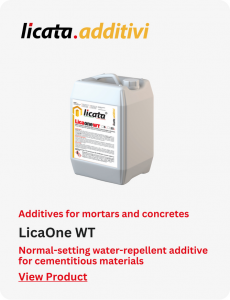
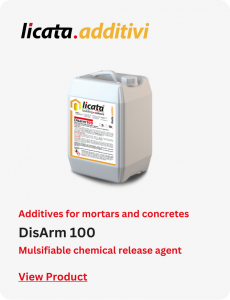
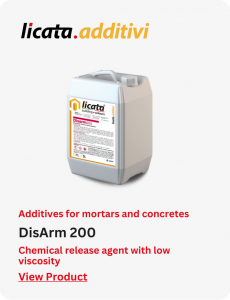
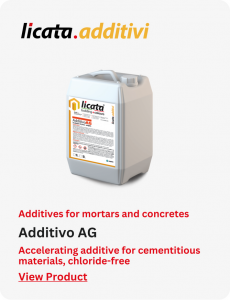
Cement Additives for Mortars and Concrete
Licata’s additives for mortar and concrete cement have been carefully developed to support superior results in your construction projects. Each product in our additives range has been specially designed to improve the concrete mixing process, enhancing the durability, workability, and overall performance of your mixes. Our additives can significantly improve your construction results, ensuring your concrete structures stand the test of time.
Designed to Improve Every Mix
Our range includes both mortar additives and concrete admixtures to reduce cracks, increase resistance, and control moisture movement. By targeting common issues such as concrete shrinkage and water ingress, our products help protect surfaces while maintaining proper permeability and adhesion. These additives are suitable for applications across multiple surfaces and conditions, from tunnels and basements to exposed facades that endure freeze thaw cycles.
By modifying the water-to-cement ratio and introducing the right chemicals during the mixing phase, you can significantly improve workability, placement, and the strength of your mix. Calcium hydroxide levels are balanced to reduce pores and prevent moisture retention, which is crucial for maintaining long-term structural quality and resistance.
Precise Formulations for Reliable Results
Licata’s cement additives include accelerators and retarders that give you full control over the curing process. Accelerators are ideal for reducing setting time in cold conditions, while retarders slow the setting process in warm environments, ensuring a stable and predictable application. This is especially beneficial in large-scale concrete products where uniform setting is crucial to prevent cracks and weak points.
These admixtures help block moisture, reduce segregation, and form sealed surfaces with greater permeability control. Every additive is developed to meet rigorous performance expectations and project specification requirements. Whether you’re managing concrete placement for transportation projects or improving surface durability for internal masonry work, our additives can support better, faster results.
Expert Support Across the UK
We offer product guidance based on the main types of additives required for your job, from plasticisers and retarders to accelerators and waterproofing agents. Our team is here to advise you on compatible substances and provide effective measures to enhance your mix based on region, weather, or application type.
Licata products are widely used across the country by contractors looking to protect, improve, and extend the life of their concrete structures. With every batch, you’re backed by a brand that puts quality, specification compliance, and real-world performance first.
Contact Us to Enquire About Mortar Additives
To learn more about Licata’s full additives range or discuss how our cement additives can help meet your project goals, speak to our team today. We operate from key locations across the UK, including West London, North London, Kent, Birmingham, Manchester, and Essex.
Let Licata support your next construction project with additives designed to improve strength, reduce risk, and increase durability from the ground up.
Frequently Asked Questions (FAQs)
The dosage depends on what you’re trying to achieve with your concrete or mortar mix. For most of our building chemicals at Licata, we recommend 0.2% to 2% of cement weight, though additives like air entraining admixtures, accelerators, and bonding agents vary. Environmental factors like temperature and humidity can affect this, so always check the product label for your specific job.
Start with the minimum recommended amount and adjust based on workability during mixing. Whether you’re working with floors, walls, or exterior surfaces, getting the water content right is essential for proper compressive strength and durability. Our team can provide a dosage table for your building materials and site conditions.
Yes, you can combine different mortar additives in the same batch, but compatibility matters. We commonly see customers pairing plasticizers with accelerators for cold conditions, or using air entraining additives with frost proofers to create a more workable and durable mortar mix. Understanding how each affects the setting process is essential.
At Licata, we recommend checking compatibility first, as some combinations can reduce water resistance or affect adhesion. Certain admixtures impact shrinkage and cracking differently when combined. Contact us and we’ll help plan the right combination for your cement mixtures, whether you’re working with sand and aggregate for walls, bricks, plasters, or other construction elements.
For liquid additives, add them to the mixing water before introducing cement, sand, and aggregate for even distribution. Powder additives can be dry-batched with cement or added during mixing, depending on what you’re trying to achieve with workability and cure times.
The goal is creating a uniform mixture where additives enhance adhesion, reduce cracking, and improve water resistance throughout. Air entraining agents and bonding agents need thorough mixing to form proper air bubble structure across the surface. At Licata, we provide clear guidance for each product in our range, ensuring success whether you’re working on floors, exterior walls, or coloured applications.
Our building chemicals and mortar additives at Licata typically last 12 to 24 months when stored correctly, varying between liquid and powder forms. Keep them sealed, away from sunlight, frost, and extreme humidity, as environmental factors affect performance. We mark each batch date so you know what you’re working with.
Proper storage is essential for maintaining their ability to enhance workability, reduce cracking, and improve durability of cement mixtures. Store in a cool, dry place where moisture or air won’t compromise the volume. If you’re unsure about older products, our team can help test whether they’ll still create the bond strength and water resistance needed for your walls, bricks, or floors.


